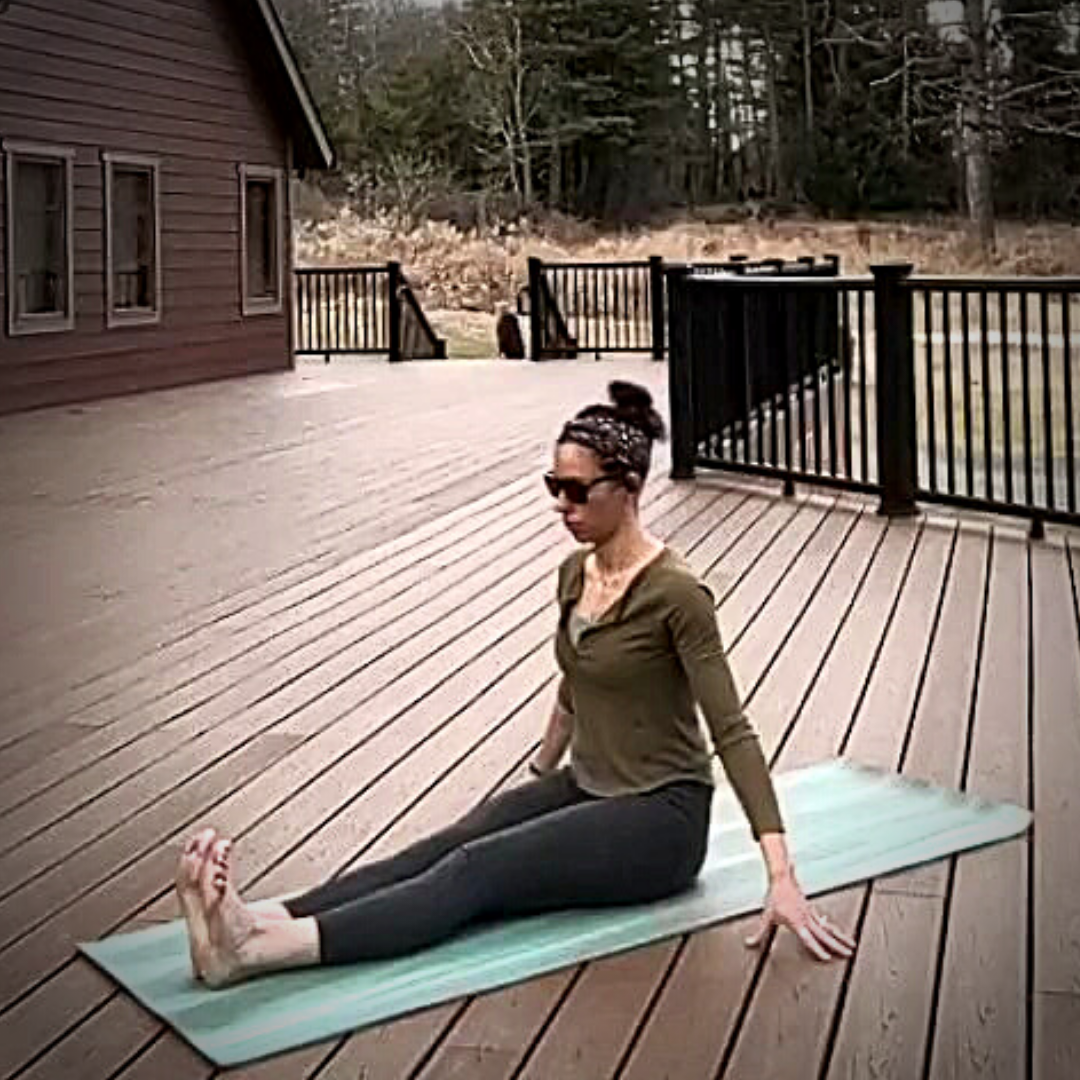
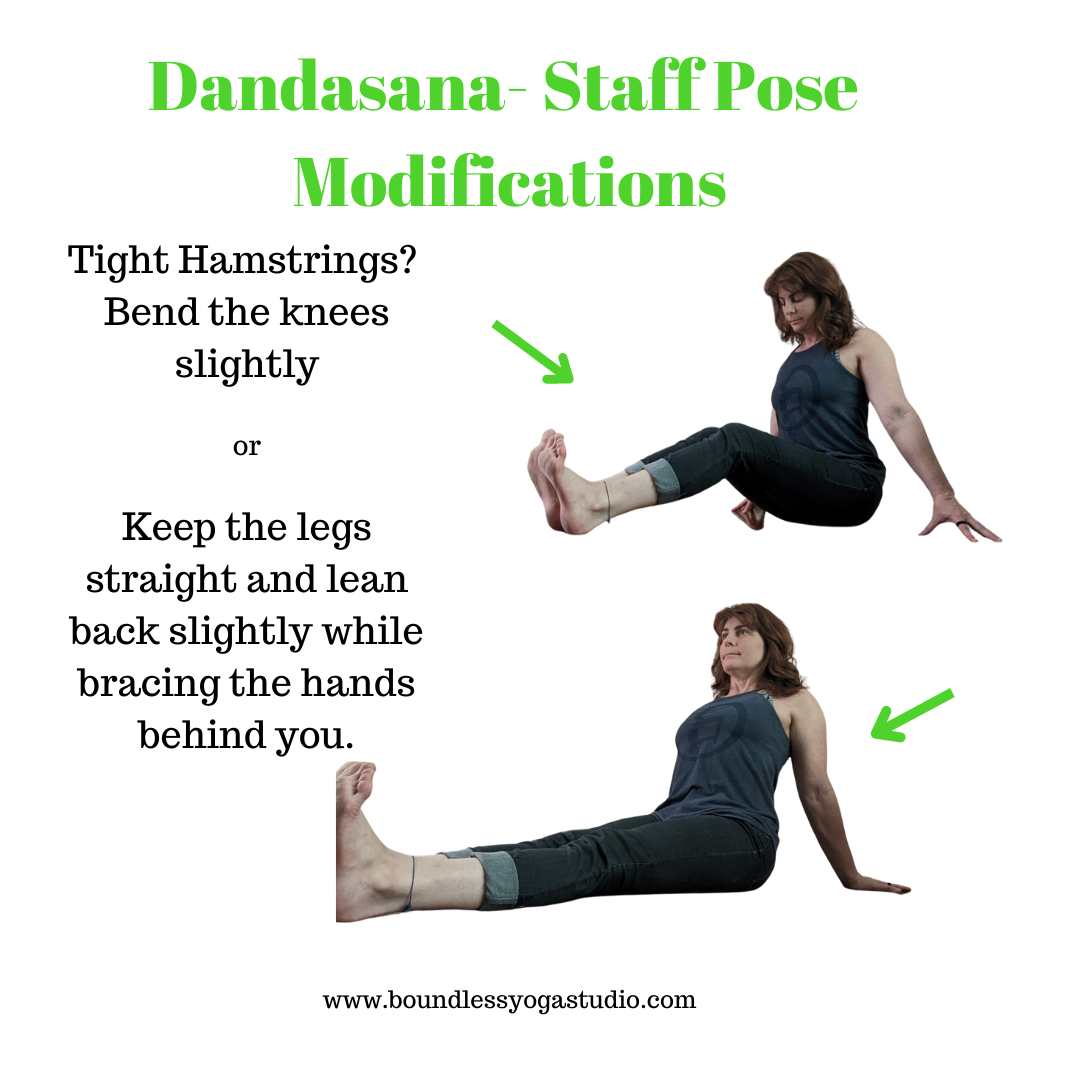
 Fallon Horan in Dandasana at her class at Forevergreen Nature Preserve (Next Series Friday's at 6pm June 2022) Dandasana is known as the staff pose and is a foundational seated posture. Danda means staff and asana posture or seat are combined to form the term dandasana. If you have taken a flow class you may have heard the term combined with another word Chaturanga Dandasana or the 4 limb staff pose that is often shorted to simply chaturanga . Dandasana is the basis of all seated postures. The staff position is often used as a preparation for other postures, yet alone it holds its own beauty in strength and power and subtle nuance. Staff Strengthens Ankles Shins Quadriceps (top of the thighs) Spinal muscles Pelvic floor and core muscles Triceps Lower fibers of the traps Staff Stretches The soles of the feet Calves Hamstrings Glutes Back of the neck Wrists flexors Biceps and anterior arm and forearm Subtle Anatomy This pose activates the root lock (mula bandha), belly lock (udiyana bandha) and chin lock (jalandahara bandha), collectively known as the great lock (maha bandha). This contains and circulates the energy within the torso. The hand lock (hasta bandha) may also be engaged if the palm is flat on the floor with activity evenly spread across the hand to engage the arches of the palms. 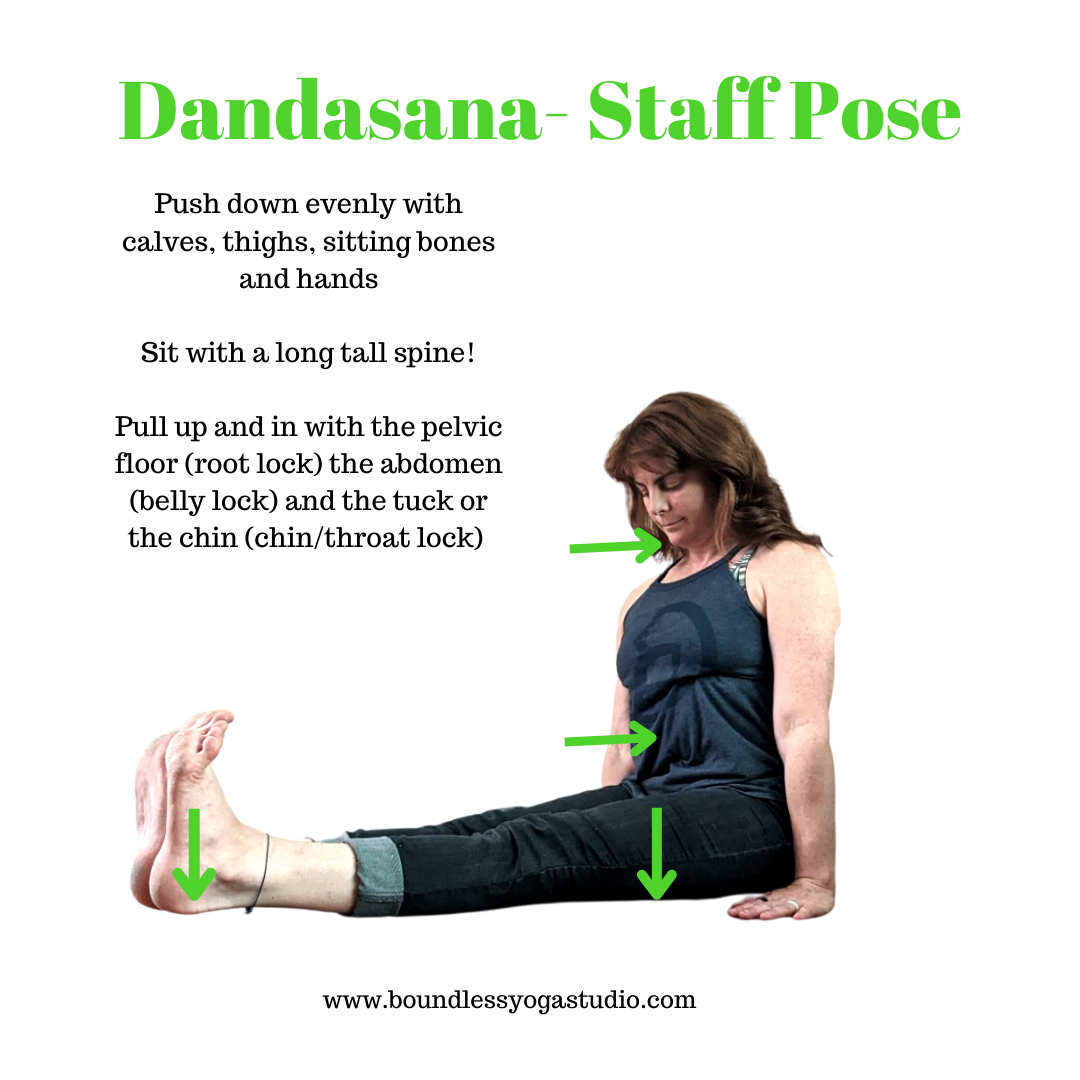 How to do Dandasana:
 Build up your strength and endurance with our monthly challenge! 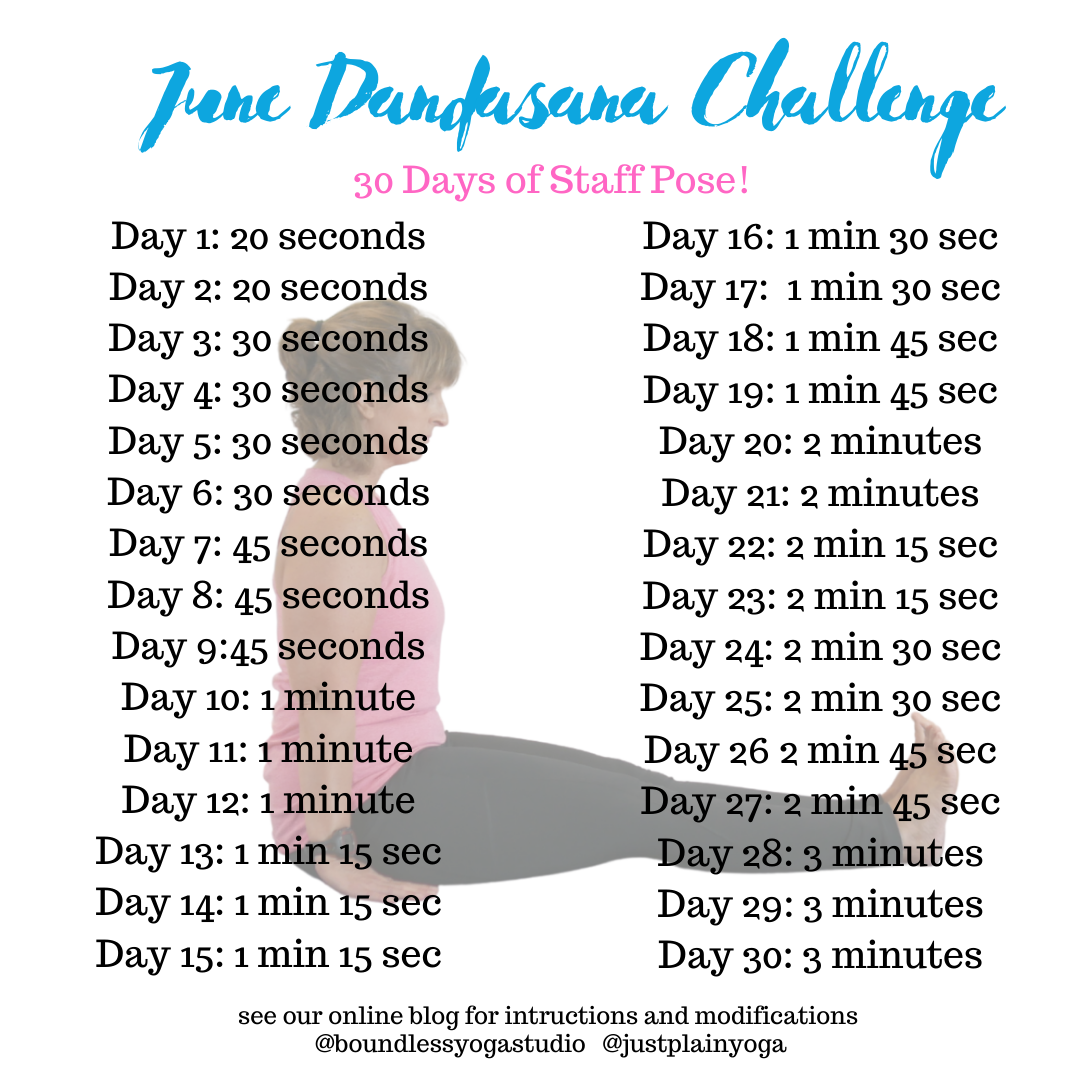
3 Comments
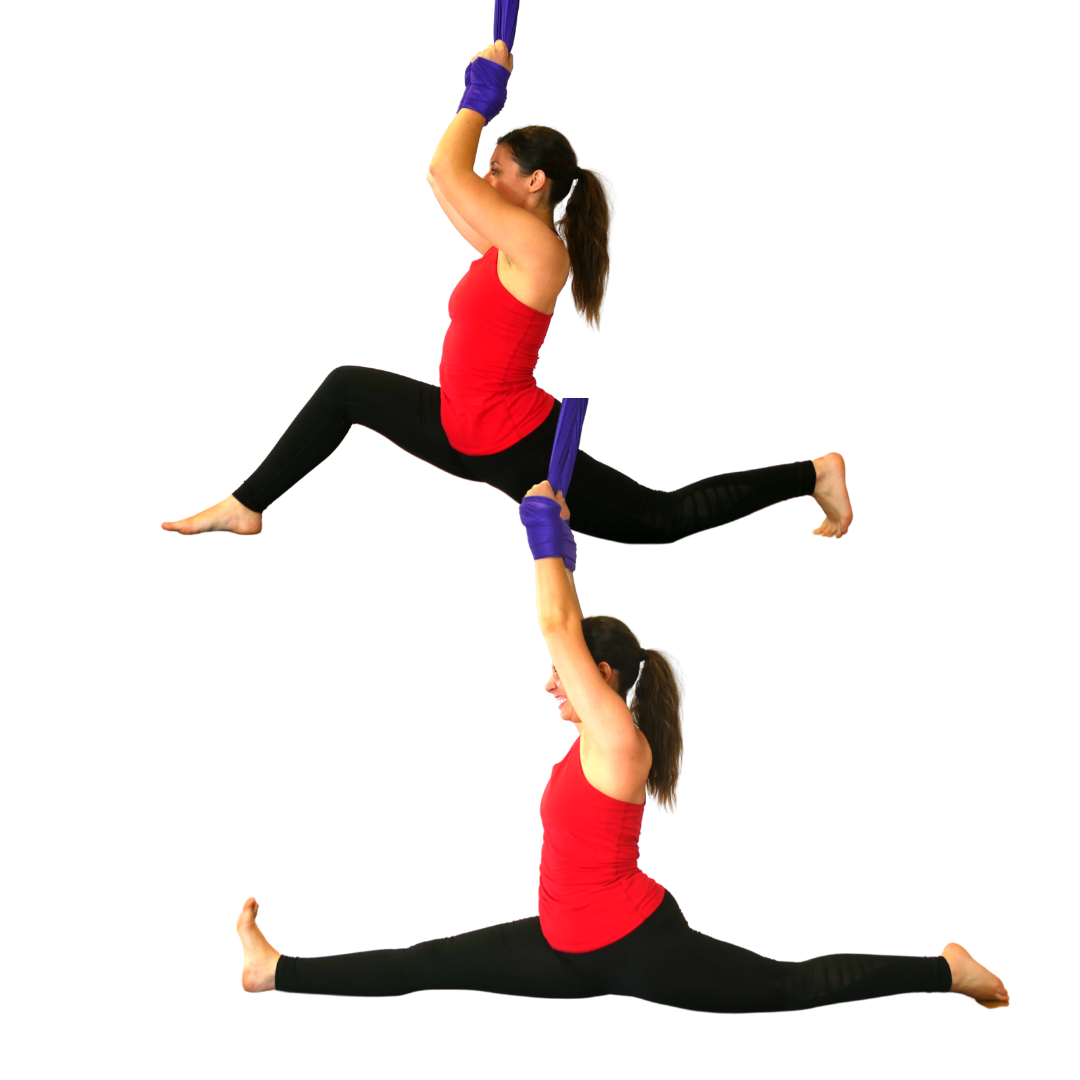
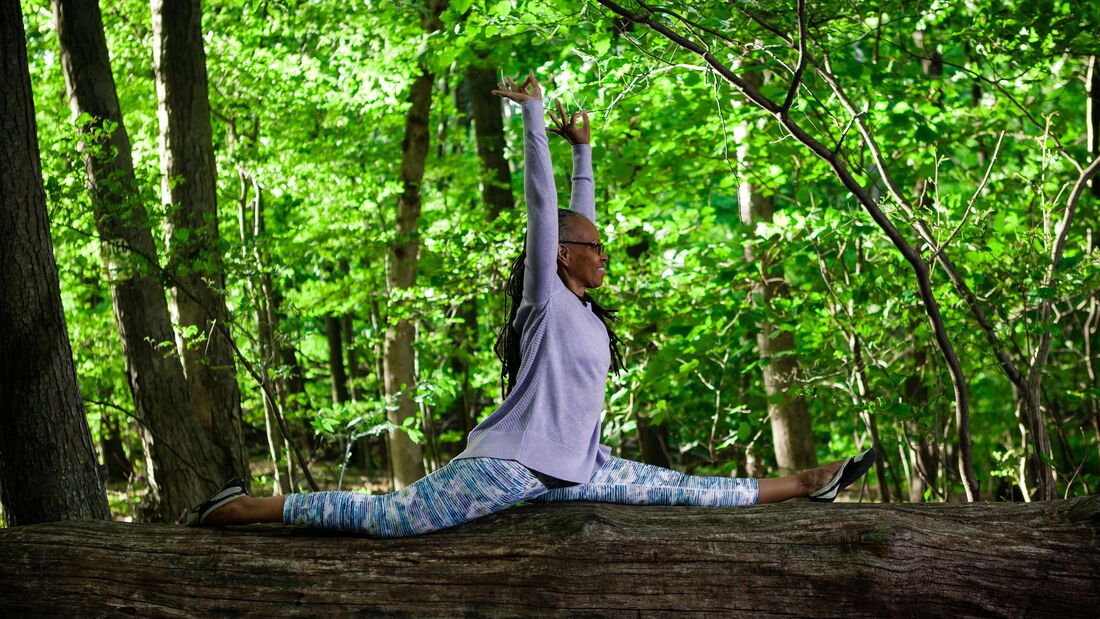
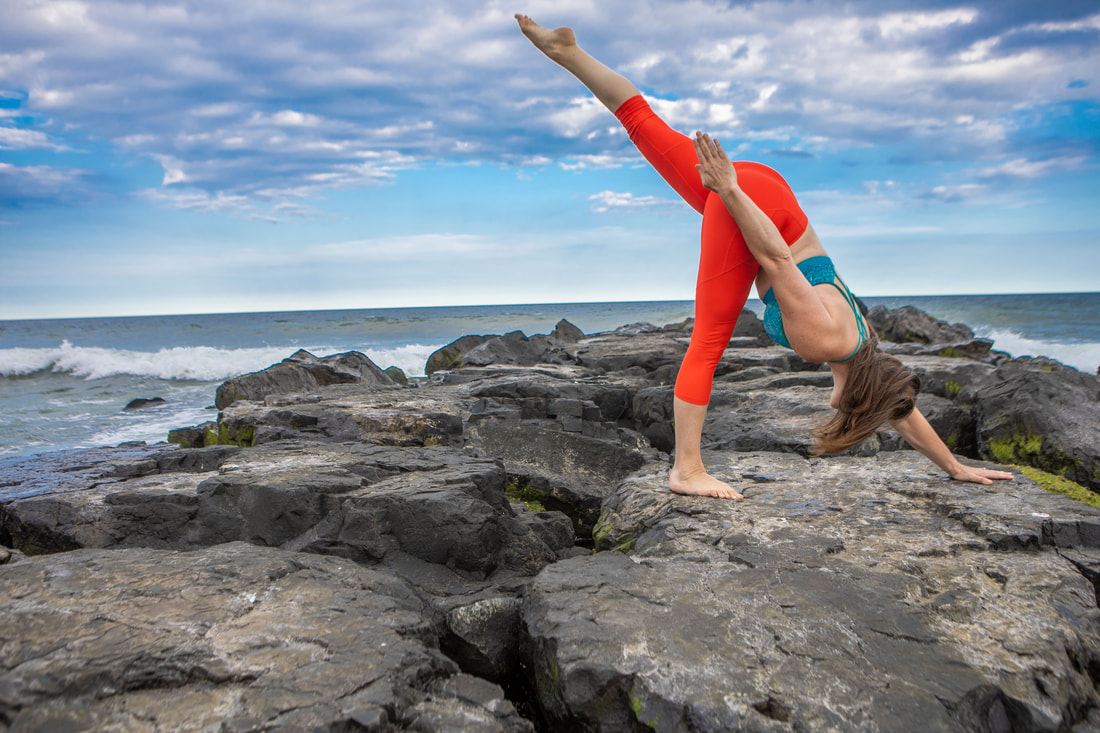
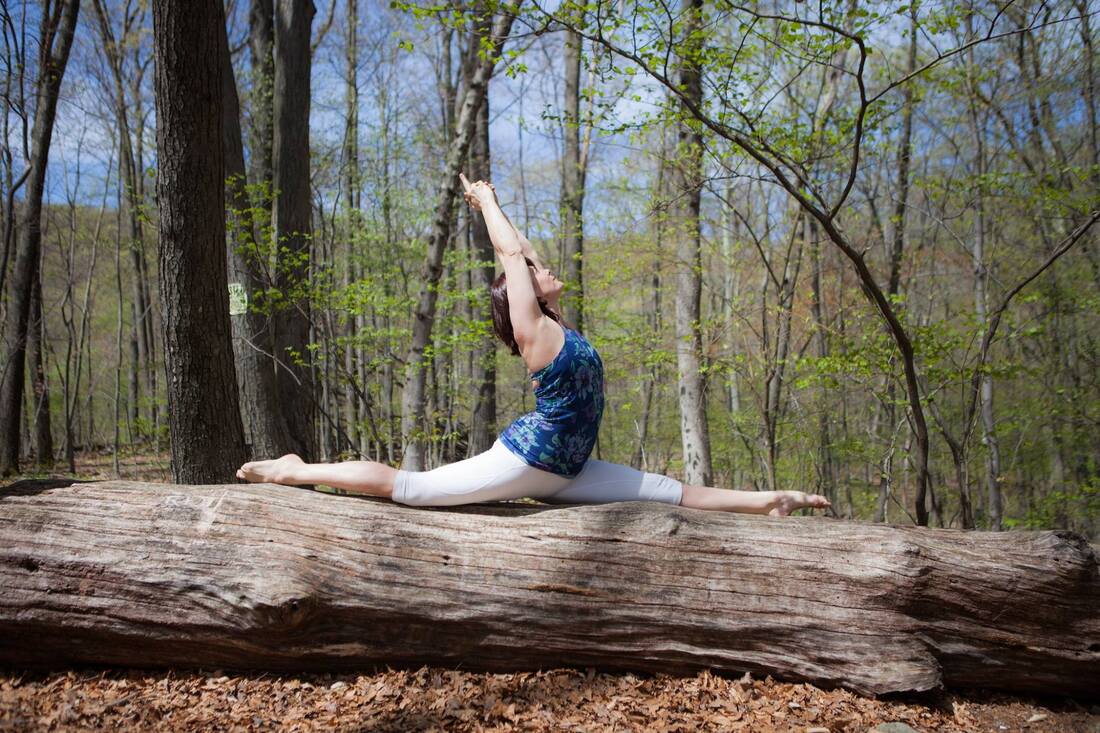 Hanumanasana (hah-new-mahn-AHS-anna) (aka monkey pose) is the Sanskrit yoga name to the famous front splits: an intense but stunningly beautiful posture that requires consistent practice to achieve the rage of flexibility. Hanuman is the name of the iconic monkey character in the story the Ramayana. In the stories he was the son of Vayu, the God of the Winds. Hanuman was famous for his magically powerful leaps, as he was able to jump over incredibly long distances. In one tale, Hanuman leaps over the ocean and moves a literal mountain to save Sita from the demon Ravana to reunite her with her great love Ram. As such he represents devotion to friendship and sees the love of is friends in all things. The fuller expressions of spits can vary from intermediate to advanced. Yet Hanumanasana is easily adapted for the beginner practitioner with a few props or by working the sides of the splits separately by taking a half spits to access the front side (calf, hamstrings, groin, hip flexion) and a lunge pose to access the back thigh (quads, hip flexors stretch and groin). Do good warm up before doing the posture with some extra focus on the hamstrings and hip flexors. You can also do back-bend in Hanuman asana as variation (mild back-bend version pictured above), for advanced version we recommend working with a teacher. Practitioners with hamstring, low back or groin injury should avoid this pose until they get a doctors clearance. Benefits Improves flexibility of hamstrings, calves, groins, pelvis, and hips. Tones the pelvic floor (root lock) Gives a feeling of grounding. Stimulates the abdominal organs as you engage your core. If taking a back-bend version it will also strengthen the spinal muscles. Step-by-Step Instructions Prepare your body for Monkey Pose by doing a warm-up.
Common Pitfalls As with all intermediate and advanced postures we highly recommend working with a qualified teacher to help you find your form and understand your appropriate limits. Hanuman pose features a closed hip position to fully access the hip flexors. It is common to open the hips up in an effort to get closer to the floor. You will get more out of the pose that will set you up for other expressions later bu taking your time and working more patiently and skillfully through the closed hip variation. Variations to Progress Make it easier: Place a blanket under your front heel to help you slide forward. Go slowly by squeezing the thighs towards each other so that you can control your descent and stop when you need to. Place a yoga block under each hand to support yourself if you cannot straighten your back leg completely or the floor simply feels far away. Place this block under your front hamstring for support if it does not come down to the floor. Add a challenge: If you are able lower yourself all the way to the floor with fully straight legs, lift your arms overhead and take a slight back-bend. or Bow fully forward to deepen the hamstring stretch on the front thigh. Preparation Prepare your body for Monkey Pose by doing other yoga poses that stretch the hamstrings and open the hips. Dangling Downward Facing Dog Warrior Three Yin- Dragons 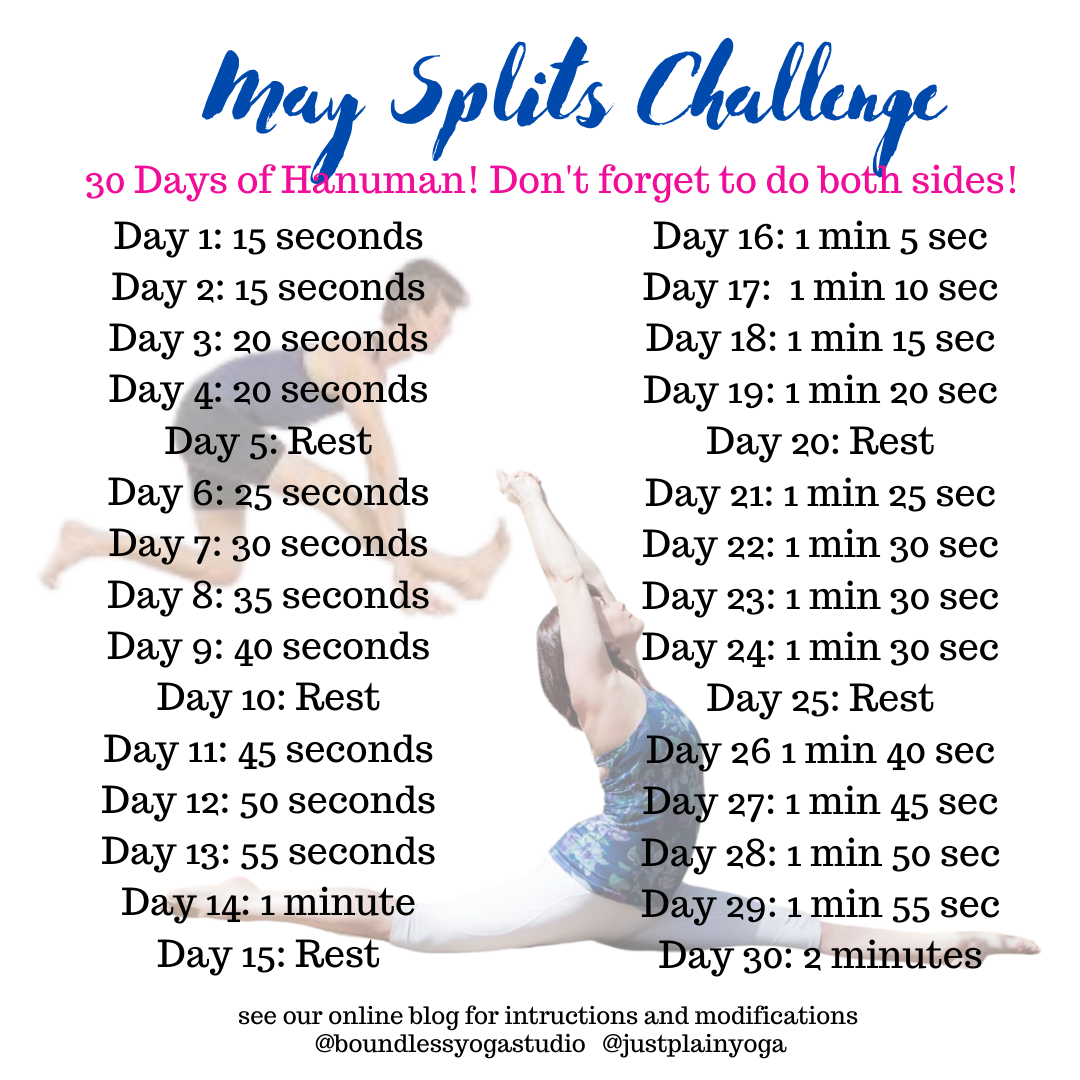 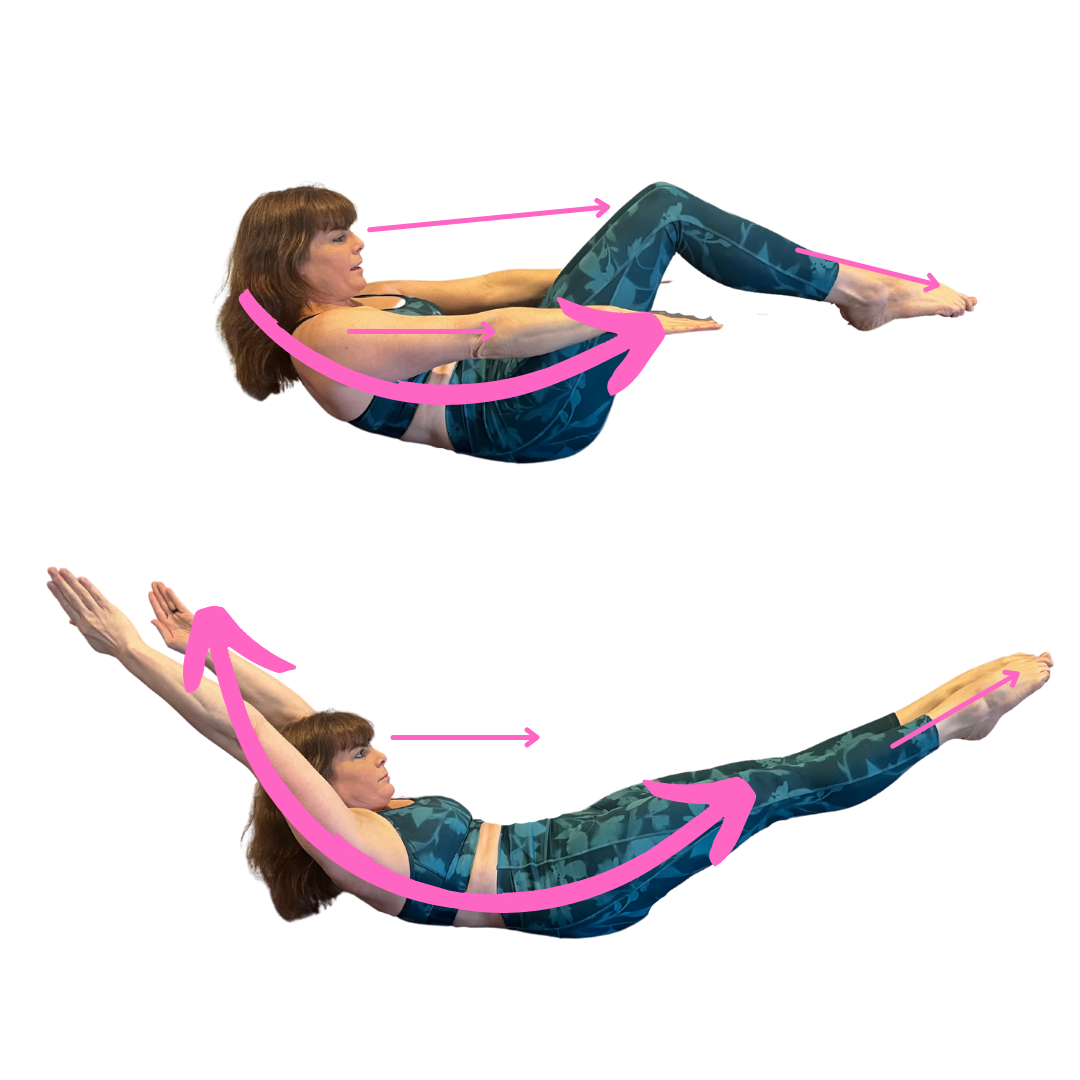 Naukā (नौका) = A small boat Asana (आसन) = Pose, Posture, Seat Naukasana aka the little boat pose is a challenging variation of the boat pose the fully engages the front of the body. This is a core strengthener. This position is known by additional names in other modalities such as C-curve in Pilates and Hollow Body in AcroYoga. There are a few different ways to enter the low boat position. From Traditional Boat Pose Lower from the V-shape of the boat by tucking the tailbone and rounding down. From supine with knees to chest. As you hug the knees into the chest, lift the shoulders off the ground and pull the chin towards the chest. As you release the knees slowly open the front of the body while keeping the shoulder blades off of the ground and a strong posterior tilt of the pelvis. From Supine Begin on your back with the arms alongside the body. Engage the core and tuck the pelvis as you lift the shoulder blades away from the ground. Note: this is a more challenging option. Variations include: Beginner-Keep the arms along the sides and knees bent Intermediate- Keep the arms along the side body and straighten the legs. Advanced- Bring the arms alongside the ears and straighten the legs. Benefits
Bandha Engagements Navasana Counter PosesBridge Pose Join us for a low boat challenge! 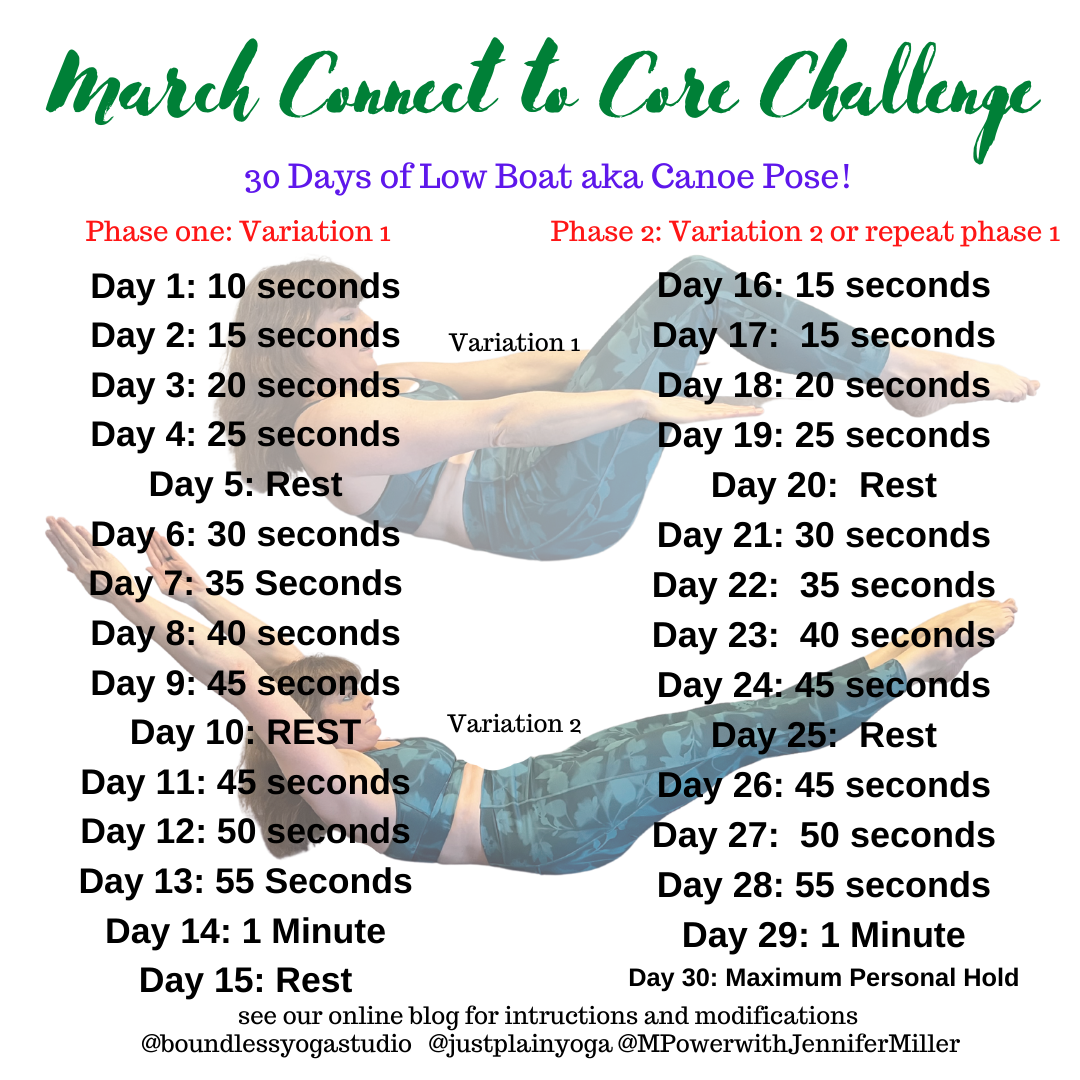 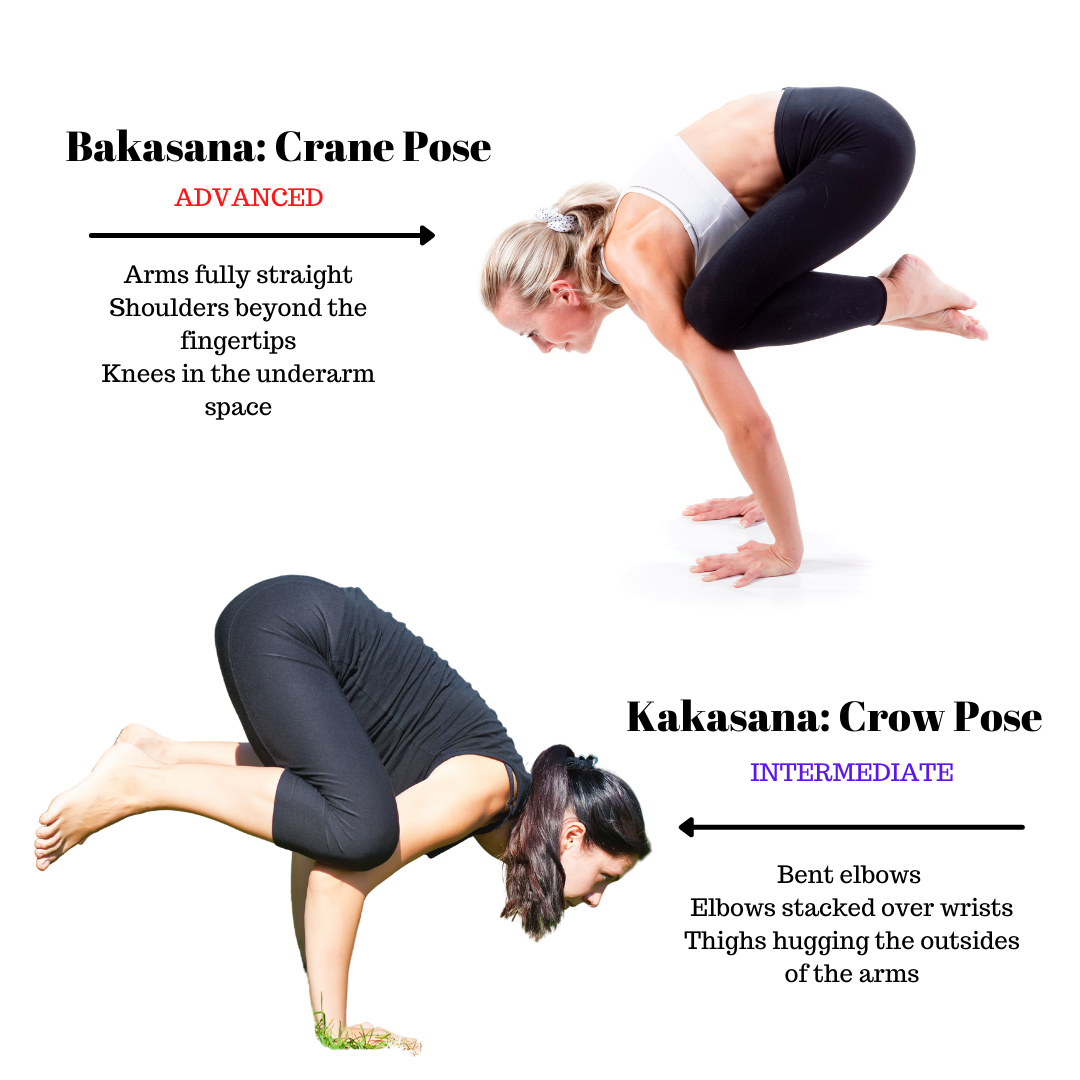 Did you know there is a difference between crow pose and crane pose? If you have been confused, you are not alone. There is certainly some confusion between crow pose (Kakasana) and crane pose (Bakasana). It is super common that bakasana will be used to call out the pose in a class no matter which option/variation the students choose. So common that many students have never herd of the term kakasana. It is not that teachers have been trying to mislead you, it is simply easier in many cases to use the more recognizable term. Kakasana, the crow pose is really a preparation and bent elbow version of bakasana, the crane pose. Most students actually practice kakasana, the crow, since they are not quite ready to fully straighten the arms for bakasana. Bakasana, the crane, requires far greater strength in the triceps to straighten the arms at the elbows. Bakasana, also needs increased strength in the core, the hip flexors, inner thighs, wrists, fingers, and shoulders. In addition to the power the body needs, both kakasana and bakasana need flexibility in the muscles of the back, the glutes, and mobility in the wrists flexors. Both kakasana (crow pose) and bakasana (crane pose) are in the category of arm balance aka hand balancing. The torso shape remains compact as the weight of the body shifts to bring the center of gravity over the hands. These poses are not for students with acute injuries to the wrists and shoulders. 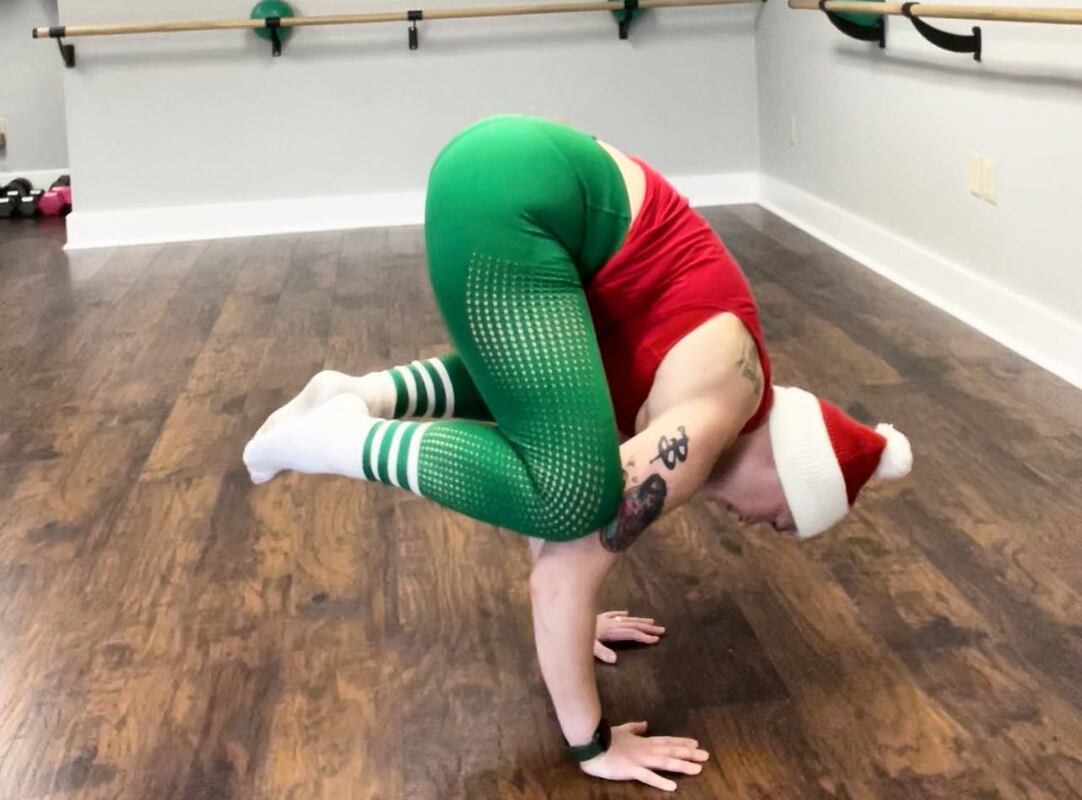 Jennifer Miller achived lift off in her longest sustained crow pose with some holiday spirit 2021! How to do Crow Pose/ Crane Pose
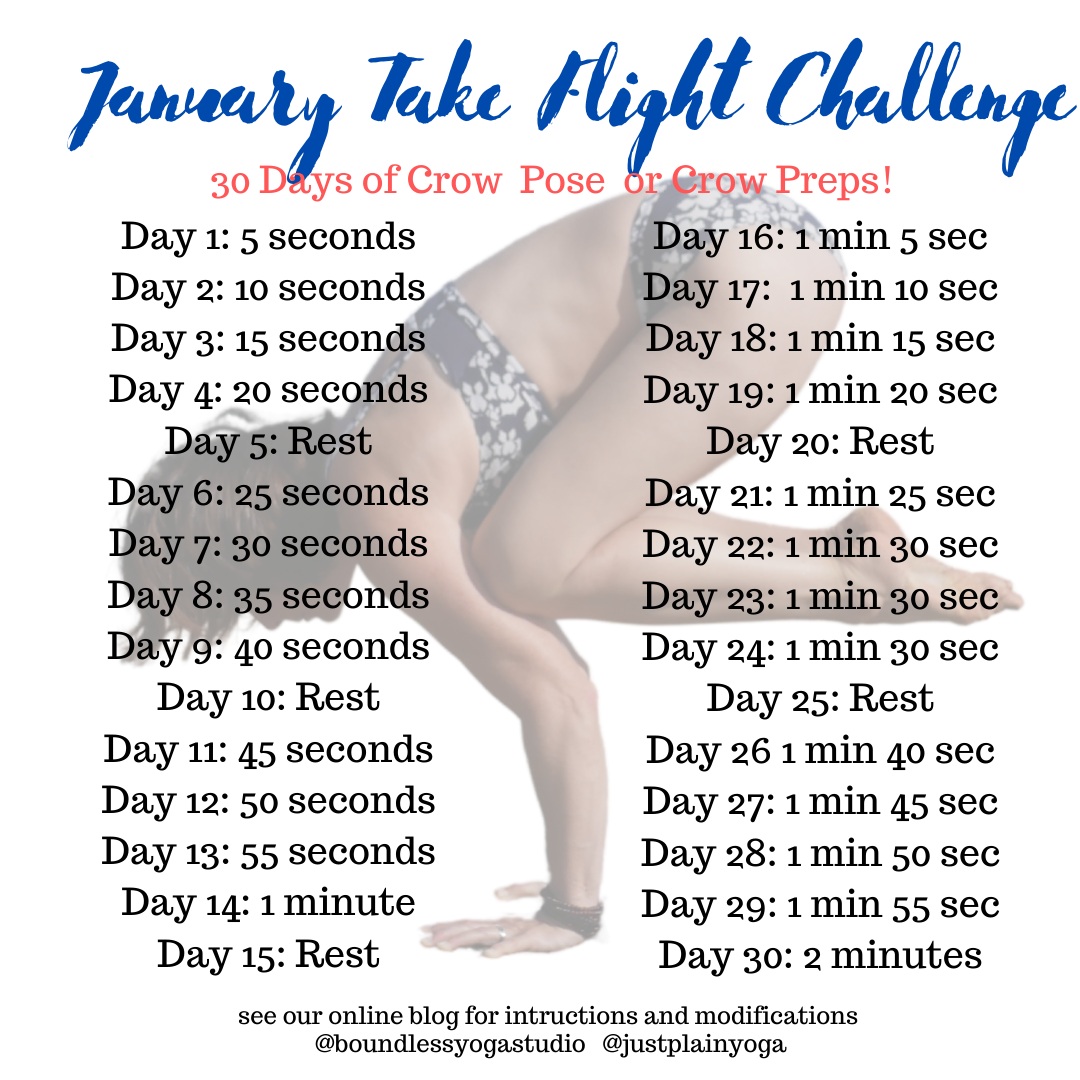 For more monthly challenges click on the photo above Tips:
Preparatory Postures:
Counter Postures:
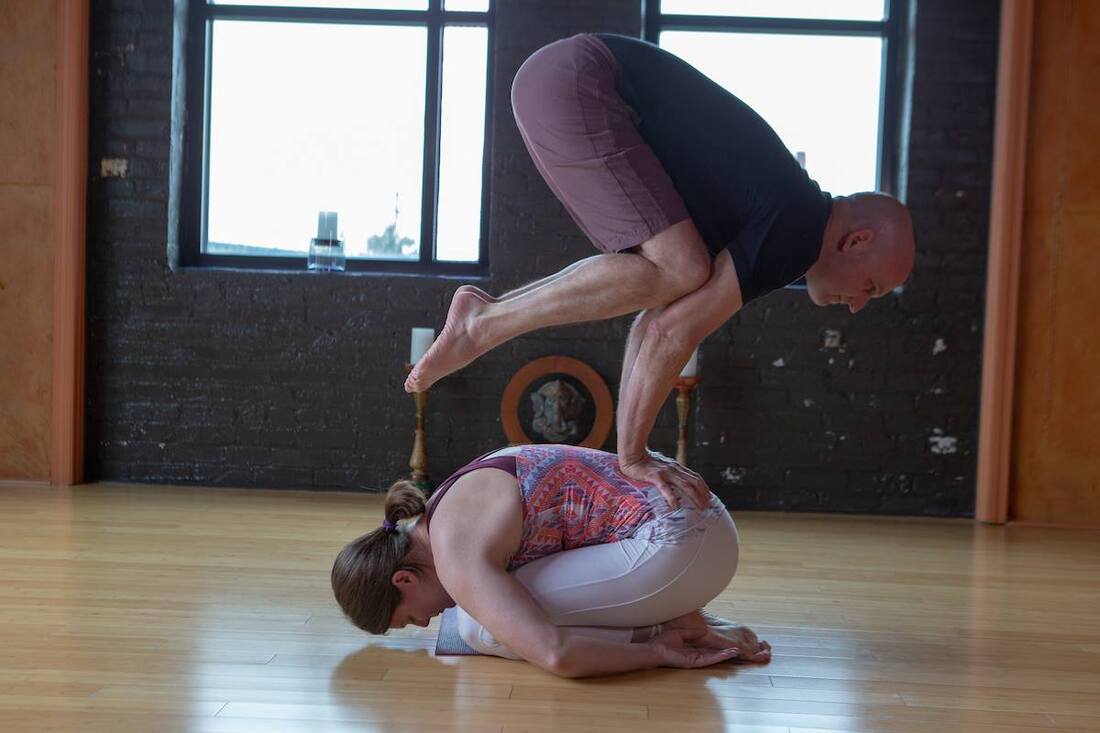 Partner Yoga: Crow on Child's Pose w/ Chris Loebsack and Brian Davis. Photo by Joe Longo Photography 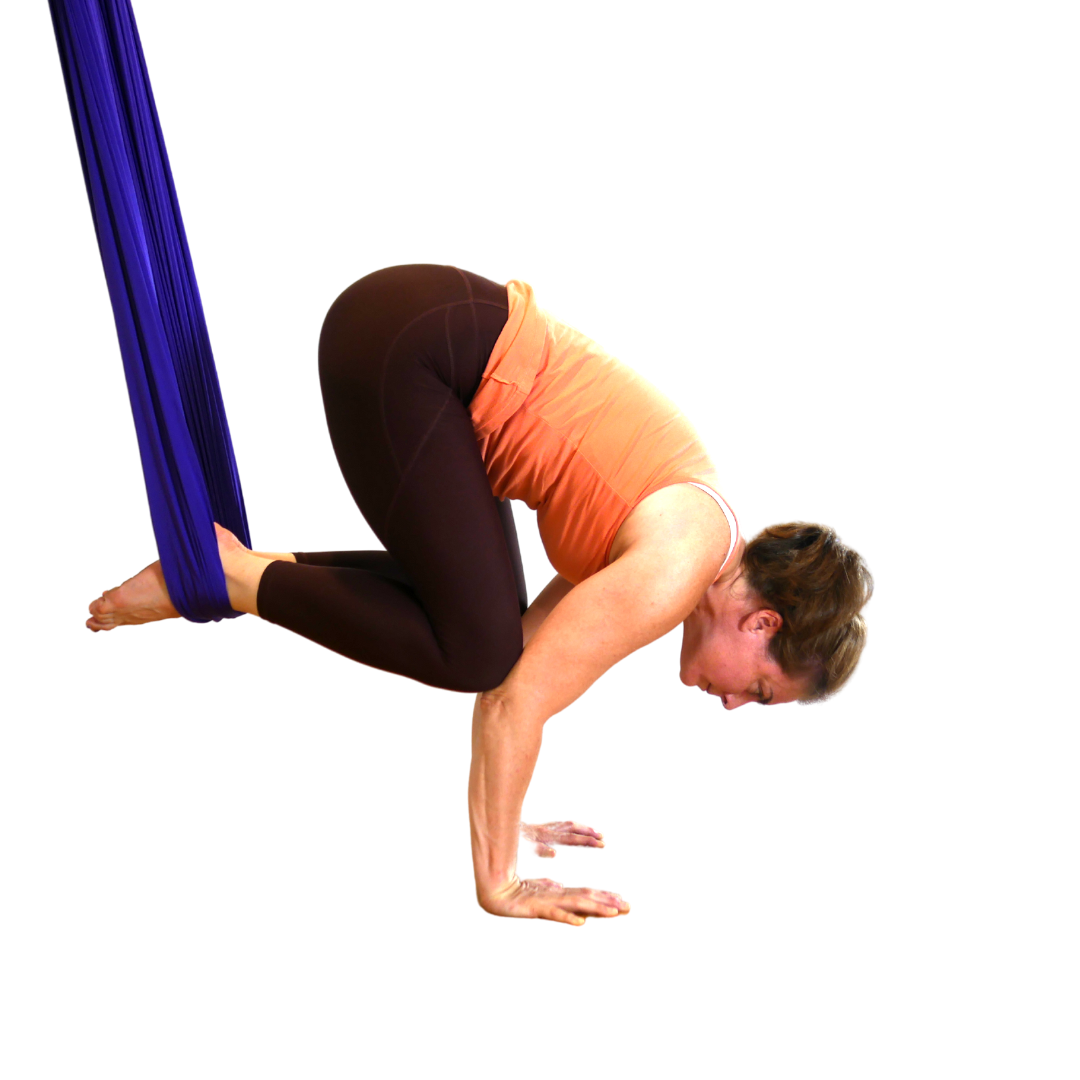 Aerial Yoga: Ankle Catch Supported Crow Pose 
About Chris Loebsack
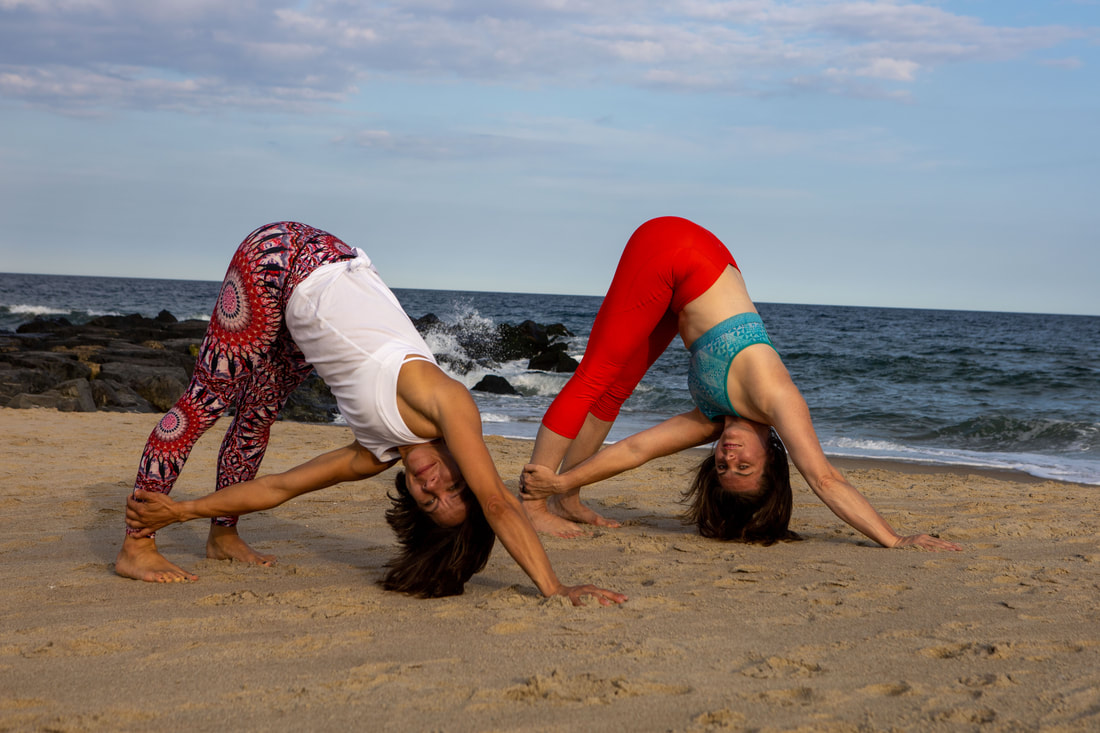
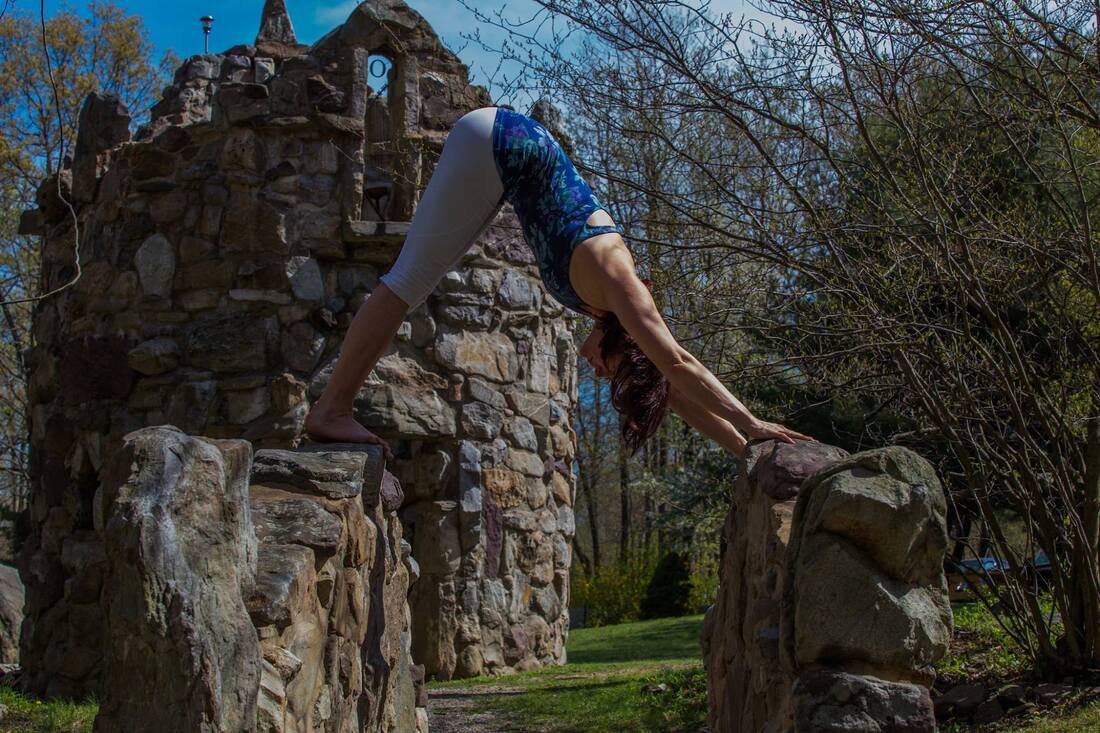 Chris Loebsack in Downward Facing Dog at columcille megalith park. Photo by Joe Longo Photography Downward facing dog pose, Adho Mukha Svanasana, is one of the most recognized poses in all of yoga. The foundational pose spans the hatha (alignment) and vinyasa (to place with intention, flow) traditions. All physical yoga actually falls under the banner of "Hatha" yoga which actually means vigorous yoga, however the term has also become synonymous with the alignment forms of the physical practice. Even non-yoga practitioners will likely recognize this upside down triangle shape as the yoga pose downward facing dog. The position may be taught as a stand alone position. It often shows up in moving forms of flow yoga (vinyasa) where the downward dog pose is practiced as part of a moving sequence such as in sun salutations (Surya Namaskra). Downward facing dog pose is an inversion posture. An Inversion is characterized by any pose that has the head lower than the heart. As both hands press into the ground and push the floor away this pose sets the stage for hand balancing (aka. arm balancing) postures. The hinge at the hips (anterior tilt of the pelvis) folds the body forward so this position is also a forward fold. 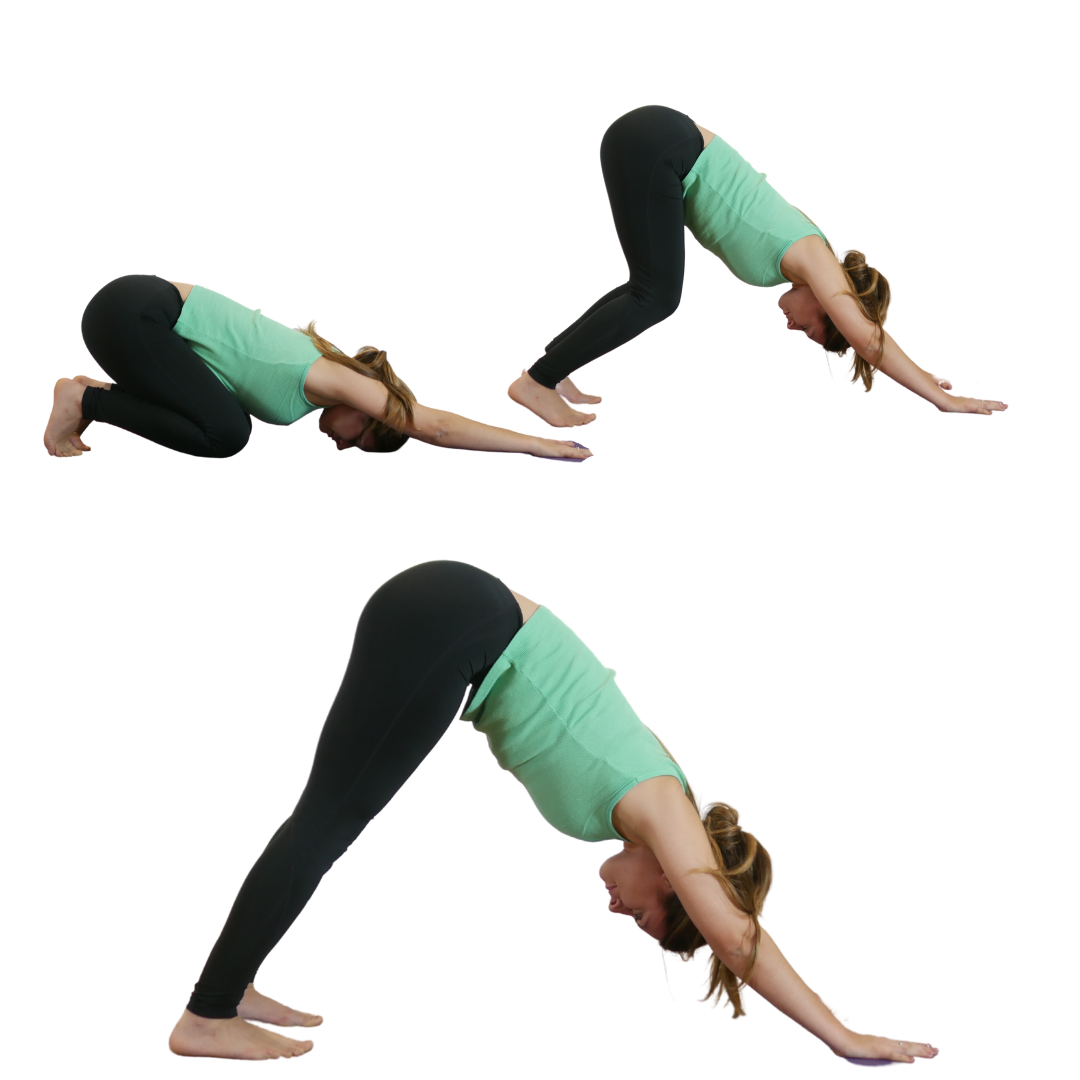 How to do Downward Dog Disclaimer- Always check with your qualified medical professional before beginning any exercise program to ensure if it is right for you. This pose is not for students with current wrist or shoulder injuries. 1.Begin in Table Position (On all fours, hands and knees. Spread the palms wide, stack the shoulders over wrists.)
2. Press back into Downward Dog
3.Hold and Breathe.
Switch back and forth between left and right leg.
Beginner Options/ Modifications: Keep the knees on the ground and work the shape of the shoulders and core stability Place the forearms on the ground (dolphin pose) to remove the wrists from the equation. Bend the knees as you keep the upper body shape to take pressure off of the calves and hamstrings Additional Variations: One Leg Down Dog (Closed Hip Position) Down Dog Split (Open Hip Position) One Arm Along the Side Body One arm reach through to twist One arm, One Leg (Opposite side) Closed Hip Spinal Balance One arm One leg Lifted Down Dog Twist 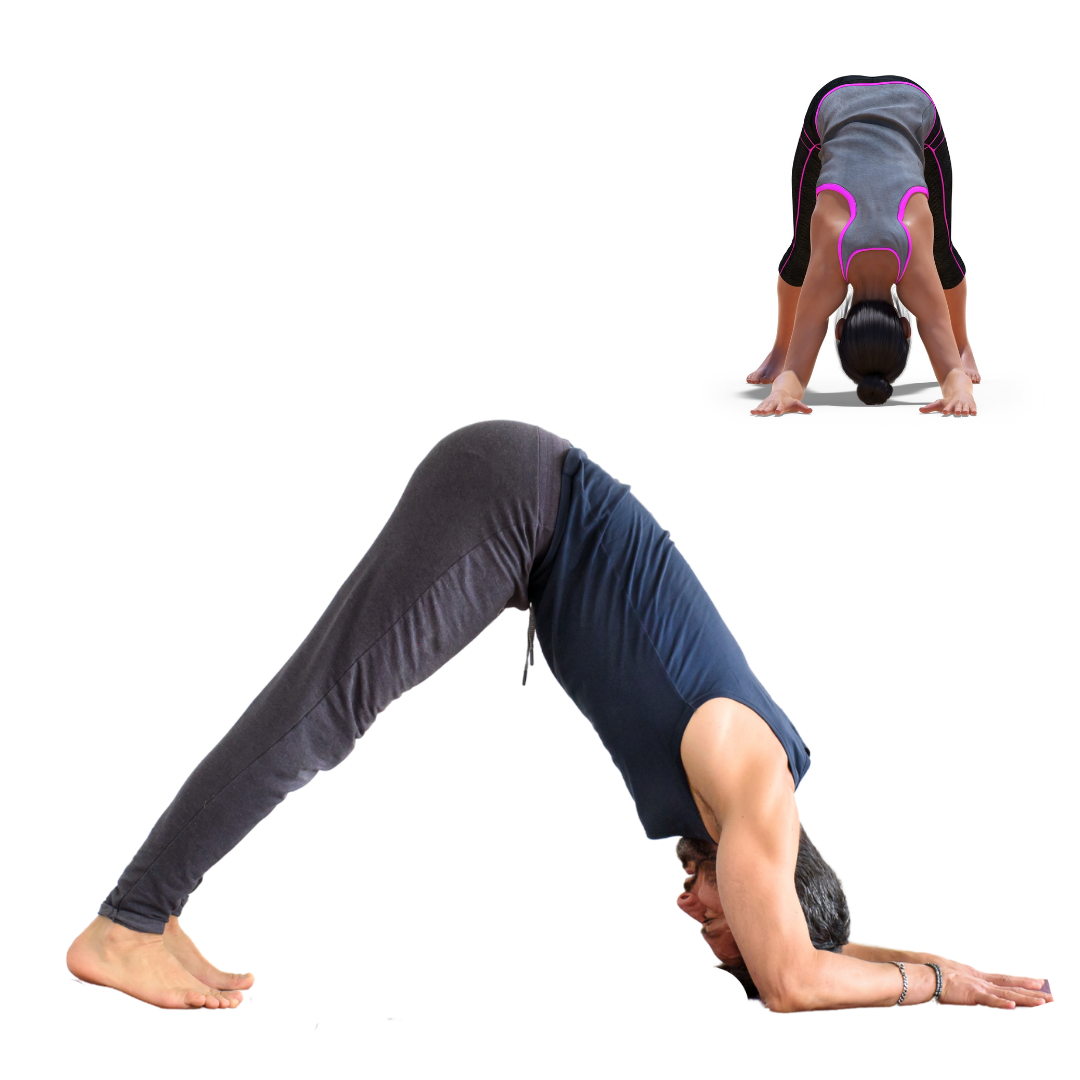 Benefits
Mountain Pose Standing Forward Fold Staff Pose Table Top Pose Plank Pose Counter Poses Child's Pose Crocodile Cobra Upward Facing Dog 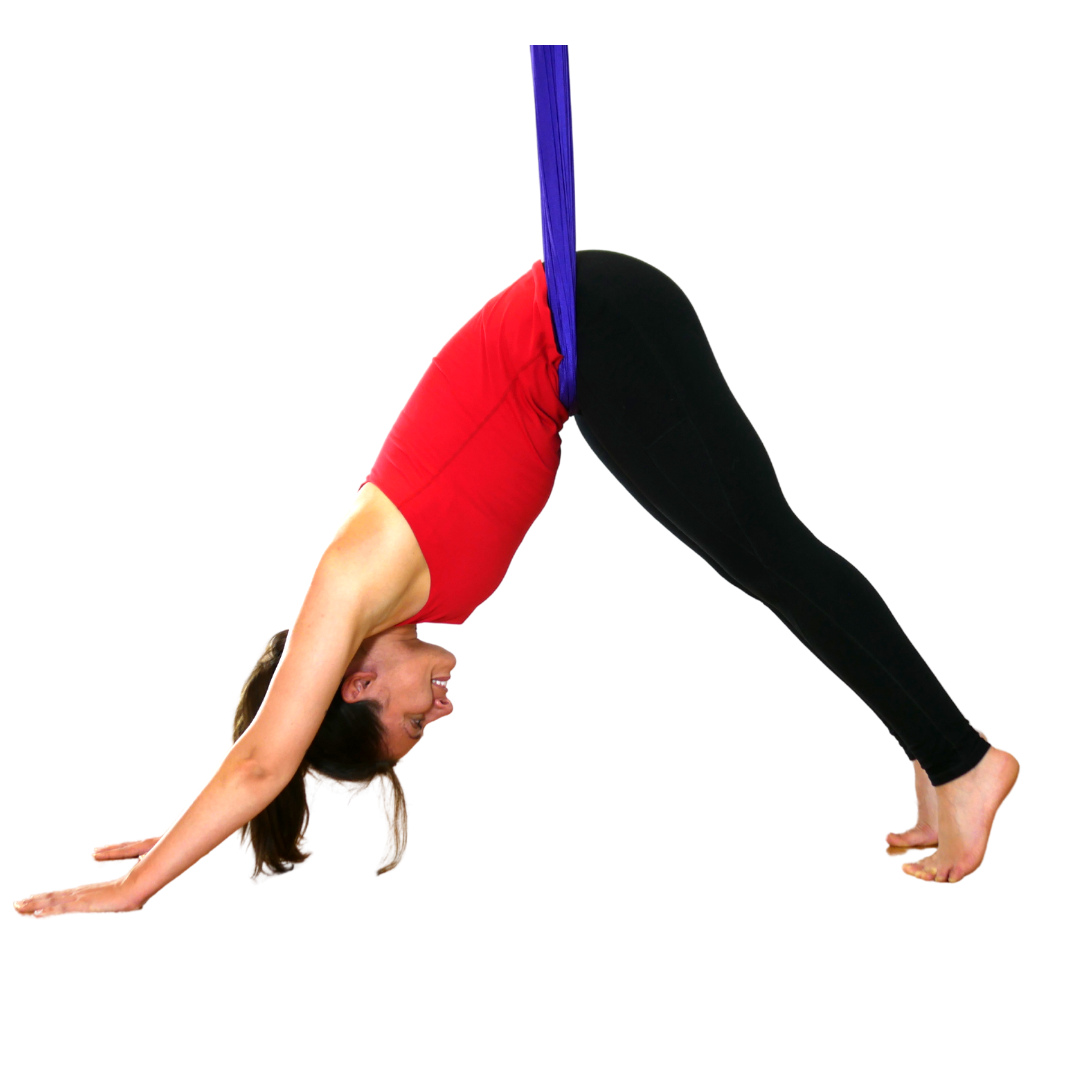 Jessica Garris Demonstrates Hip Lean Downward Facing Dog in Aerial Yoga 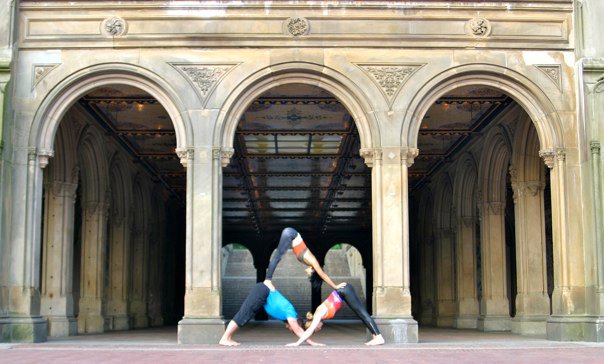 Bases: Sam Prestige, Chris Loebsack Flyer: Mary Aranas AcroYoga Down Dog Pyramid The downward facing dog pose is simple, but simple does not mean easy! It requires a combination of strength and mobility to access and hold the shape. Endurance is built over time, with consistency and a focused mind. “I just know about sweat and frustration. And that what I once thought was impossible somehow doesn't always stay that way permanently. One day it's suddenly easy and accessible, and mostly because I've stopped struggling against it. I've just accepted where I am, keep showing up, and then the change just happens.” ― Edward Vilga, Downward Dog 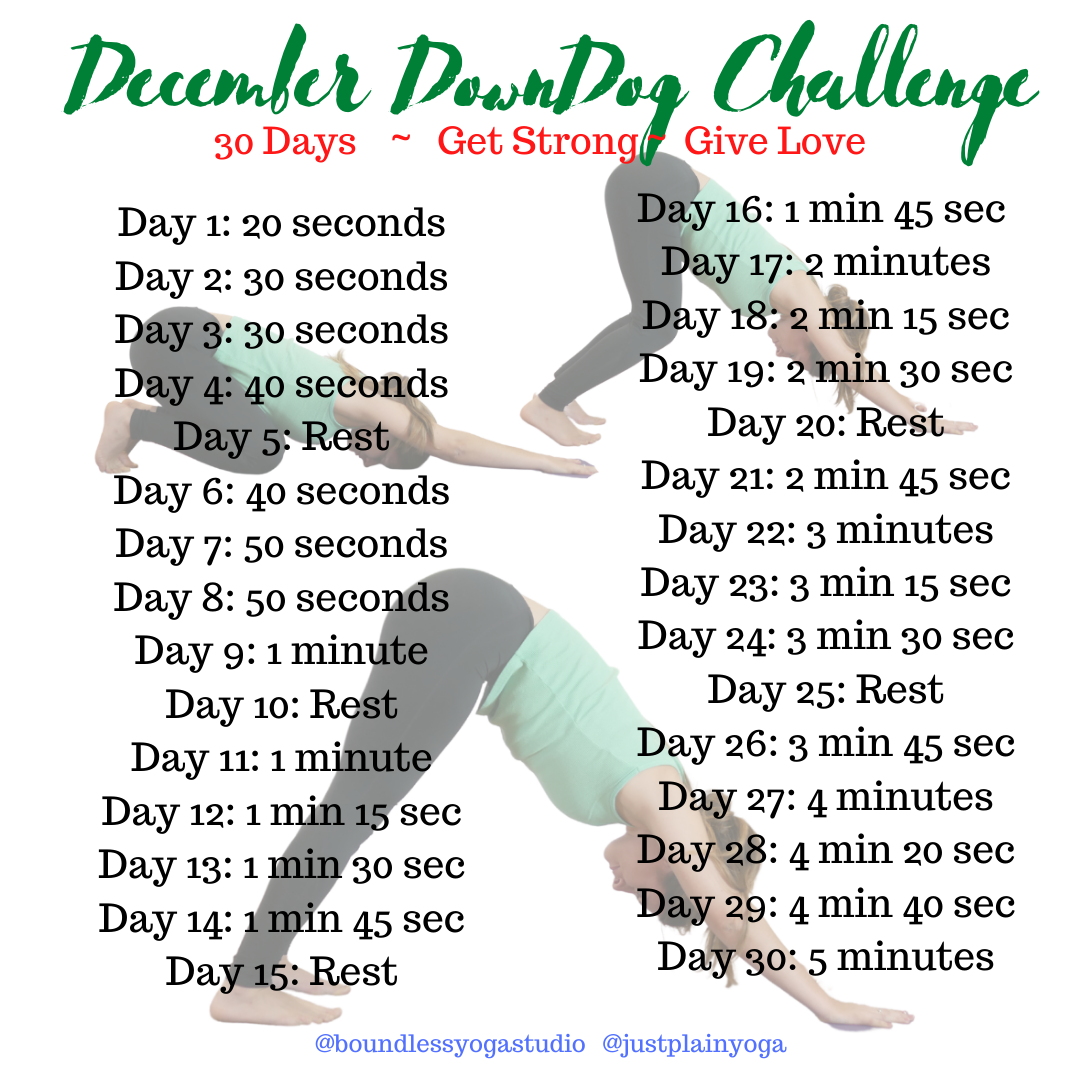 Explore other monthly challenges by clicking on the photo. Blog by Chris Loebsack 500hr ERYT
|
Boundless Yoga Staff & StudentsWe are continuously interested on how our reactions and responses to our personal journeys, albeit travel, adventure, new job, etc. mirror and reflect our social, emotional and spiritual ups and downs. We try every day to apply what we learn about ourselves on the yoga mat to our personal lives. Thank you for tuning in as we share some of those aspects with you. Archives
December 2022
Categories
All
|
- HOME
-
- Health Coaching w/ Jillian
- Book Club Discussion
- Spring '24 - Community Classes by Teachers in Training
- 4/2 - 4/30 (Tues) : Ashtanga 101
- 5/1 - 6/5 (Wed): Aerial Yoga Beginner Series
- 5/4 Introduction to Arm Balances
- 5/6-5/31 (Mon-Fri) : Morning Movement Challange
- 5/7 - 5/28 (Tues): Roll & Release Series
- 5/17- 5/19: Chair Yoga Foundations Course
- 6/1 Inversions Demystified (Stroudsburg)
- 6/4 Rhythm Flow Pop Up
- Arm Balance Academy - CE Program
- Schedule
-
- 200 Hour Teacher Training
- Taiwan - 200hr Immersion Program
- 300 Hour Teacher Training
- Restorative Foundations Course
- Chair Yoga Foundations Course
- Arm Balance Academy - CE Program
- Inversion Immersion Training Program
- Personal Development- Continuing Studies
- Professional Development Continuing Studies Module
- Graduate Directory
- Yoga Online Anytime
- Contact Us
-
- Chris Loebsack, Owner 500 E-RYT,
- Fallon Horan 500 RYT
- Tracy Gross 500 ERYT
- Jennifer Miller 500 RYT
- Ian Froman 500 RYT
- Jillian Harper 500 RYT, Personal Trainer and Wellness Coach
- Diane Stanton 500 RYT
- Katy Case 500 RYT
- Ryan "Bubba" Ramsey 200 CYT
- Courtney Davis 200 CYT
- Erin Peters 200 CYT & Aerial Yoga
- Maura Maula 200hr CYT
- Katie Bona 200 CYT & Dance Educator
- Alexandra Fury 200hr RYT
- Blog: Insights from our Staff and Students
- Community Resources
- Studio Rental
- Media and News
- Yoga Podcast: Chats from the Mat w/ Brian M. Davis
- HOME
-
- Health Coaching w/ Jillian
- Book Club Discussion
- Spring '24 - Community Classes by Teachers in Training
- 4/2 - 4/30 (Tues) : Ashtanga 101
- 5/1 - 6/5 (Wed): Aerial Yoga Beginner Series
- 5/4 Introduction to Arm Balances
- 5/6-5/31 (Mon-Fri) : Morning Movement Challange
- 5/7 - 5/28 (Tues): Roll & Release Series
- 5/17- 5/19: Chair Yoga Foundations Course
- 6/1 Inversions Demystified (Stroudsburg)
- 6/4 Rhythm Flow Pop Up
- Arm Balance Academy - CE Program
- Schedule
-
- 200 Hour Teacher Training
- Taiwan - 200hr Immersion Program
- 300 Hour Teacher Training
- Restorative Foundations Course
- Chair Yoga Foundations Course
- Arm Balance Academy - CE Program
- Inversion Immersion Training Program
- Personal Development- Continuing Studies
- Professional Development Continuing Studies Module
- Graduate Directory
- Yoga Online Anytime
- Contact Us
-
- Chris Loebsack, Owner 500 E-RYT,
- Fallon Horan 500 RYT
- Tracy Gross 500 ERYT
- Jennifer Miller 500 RYT
- Ian Froman 500 RYT
- Jillian Harper 500 RYT, Personal Trainer and Wellness Coach
- Diane Stanton 500 RYT
- Katy Case 500 RYT
- Ryan "Bubba" Ramsey 200 CYT
- Courtney Davis 200 CYT
- Erin Peters 200 CYT & Aerial Yoga
- Maura Maula 200hr CYT
- Katie Bona 200 CYT & Dance Educator
- Alexandra Fury 200hr RYT
- Blog: Insights from our Staff and Students
- Community Resources
- Studio Rental
- Media and News
- Yoga Podcast: Chats from the Mat w/ Brian M. Davis
Get more updates and fun yoga information on our Facebook page!
 RSS Feed